Buy weddingplanning.eu ?
We are moving the project
weddingplanning.eu .
Are you interested in purchasing the domain
weddingplanning.eu ?
domain@kv-gmbh.de · 0541-91531010
Buy weddingplanning.eu ?
What is the difference between allosteric inhibition and allosteric activation?
Allosteric inhibition occurs when a molecule binds to an allosteric site on an enzyme, causing a conformational change that decreases the enzyme's activity. In contrast, allosteric activation involves a molecule binding to an allosteric site on an enzyme, leading to a conformational change that increases the enzyme's activity. Essentially, allosteric inhibition decreases enzyme activity, while allosteric activation increases enzyme activity. **
Is allosteric inhibition irreversible?
Allosteric inhibition is typically reversible, meaning that the inhibitor can bind to the allosteric site and block the activity of the enzyme, but can also dissociate from the site, allowing the enzyme to regain its activity. This is in contrast to irreversible inhibition, where the inhibitor forms a covalent bond with the enzyme, permanently inactivating it. **


Similar search terms for Allosteric
Top-Angebote
Products related to Allosteric:
-
"Veer Decor Paper Flowers Wallpaper - Roll 20.86""x33ft""Featuring an expertly crafted collage of paper flowers that creates a stunning 3D effect, this wallpaper brings ""wow"" to your walls! Printed on a PVC-free non-woven material that guarantees effortless side-to-side seamless design match and easy..."154,99 $*Shipping: 0,00 $Secure redirect to the provider
-
Royal Catering Hot Food Display - 35cm RCHT-850The Hot Food Display RCHT-850 from the catering supplies of Royal Catering is well-suited for presenting various dishes and keeping them warm. The counter provides fresh and instantly available dishes to your guests, be it at a hotel buffet, in a restaurant or at a café. The light at the top of the counter allows for a good view of the displayed products. The rectangular shape of the counter results in additional space for your dishes compared to other, slanted models. The case is made of sturdy, stainless steel with sides made of glass. The counter is fitted with a glass door and a handle for taking dishes out and putting them in. There are 3 shelves on which you can present your products inside the counter. The shelves, which have a gap of 11 cm, can be pulled out comfortably just like a drawer. A metal mechanism prevents the shelves from tilting and falling. They are also fitted with an edging on the sides which keeps your products from slipping out. Each shelf provides plenty of space with an area of 29 x 30 cm. The inside of the Hot Counter can be heated to a maximum temperature of 85° C using the quick and efficient 850 W heater element. By using the control dial you can smoothly set a temperature which will then be held exactly by a precise thermostat. The built-in digital display will always show the current temperature. The heating system is fitted with a water bowl, which can provide a mild moistening of your dishes via evaporation. This effect prevents a heat induced drying up of your culinary delights. Additionally, there is a removable drawer for catching food debris in the bottom of the case. Cleaning the Hot Food Display is very easy: thanks to its smooth glass and stainless steel, no special detergents are needed. The rack, shelves and drawer can be removed from the counter for cleaning.172,00 £*Shipping: 0,00 £Secure redirect to the provider
-
Dormont® Gas Catering Hose - 1 x 1500mmDormont Gas Catering Hose - 1 x 1500mm - Quick Release The Dormont 1 x 1500mm Gas Catering Hose is the go-to choice for commercial kitchens that need the absolute best in terms of safety hygiene and performance. It's designed to make connection to LPG, Town Gas and Natural Gas a total breeze using a quick-release system. This hose has earned its place as one of the industry leaders thanks to its incredible reliability and comes with the added seal of approval from the BSI Kitemark (KM 768720) and full compliance with BS 669-2:1997. Built from corrugated 304 stainless steel with a coating that's been dipped in a special yellow antimicrobial PVC, this hose is going to withstand corrosion, wear and all the nasty stuff that can build up in a busy professional kitchen. And because each one is put together in a factory and then put through a pressure tes190,80 £*Shipping: 0,00 £Secure redirect to the provider
-
Dormont® Gas Catering Hose - 1 x 1000mmDormont Gas Catering Hose - 1 x 1000mm – Safe, Reliable, and Hygienic Gas Connection for Catering Appliances The Dormont Gas Catering Hose is the ideal solution for connecting your appliances to LPG, Town, or Natural Gas with ease. This 1 x 1000mm quick-release gas hose is renowned for its BSI Kitemark certification, ensuring unmatched quality, safety, and reliability. Designed with durable materials and built-in safety features, Dormont gas hoses guarantee performance in demanding catering environments. Featuring a yellow antimicrobial PVC coating, the Dormont hose is resistant to corrosion and bacterial build-up, making it perfect for maintaining hygiene in commercial kitchens. Certified to British Standard 669-2:1997, this hose comes with a174,00 £*Shipping: 0,00 £Secure redirect to the provider




-
What is allosteric inhibition?
Allosteric inhibition is a type of enzyme regulation where a molecule binds to a site on the enzyme that is different from the active site, causing a conformational change in the enzyme's structure. This change reduces the enzyme's activity and ability to bind to its substrate, ultimately inhibiting its function. Allosteric inhibition is a reversible process and can be used to regulate enzyme activity in response to changing cellular conditions. **
-
Does Vmax change in allosteric inhibition?
Yes, Vmax can change in allosteric inhibition. Allosteric inhibition occurs when a molecule binds to an enzyme at a site other than the active site, causing a conformational change that reduces the enzyme's activity. This can result in a decrease in the enzyme's maximum velocity (Vmax) as the enzyme becomes less efficient at catalyzing the reaction. Therefore, allosteric inhibition can lead to a decrease in Vmax, ultimately affecting the rate of the enzymatic reaction. **
-
What is a cofactor allosteric activator?
A cofactor allosteric activator is a molecule that binds to an enzyme at a site other than the active site, causing a conformational change in the enzyme that increases its activity. This type of activator works by promoting the enzyme's ability to bind to its substrate and carry out its catalytic function. Cofactor allosteric activators are important for regulating enzyme activity in response to changes in the cell's environment, allowing for fine-tuning of metabolic pathways and other cellular processes. **
-
Is end product repression automatically an allosteric inhibition?
End product repression is not automatically an allosteric inhibition. While end product repression often involves the inhibition of an enzyme by the end product of a metabolic pathway, this inhibition can occur through various mechanisms. Allosteric inhibition is one possible mechanism, where the end product binds to a site on the enzyme other than the active site, leading to a conformational change that inhibits the enzyme's activity. However, end product repression can also occur through competitive inhibition, non-competitive inhibition, or other regulatory mechanisms that do not involve allosteric binding. **

Is an end-product repression automatically an allosteric inhibition?
No, an end-product repression is not automatically an allosteric inhibition. End-product repression refers to the regulation of enzyme activity by the final product of a metabolic pathway, typically through feedback inhibition. This can occur through various mechanisms, including competitive inhibition or non-competitive inhibition, in addition to allosteric inhibition. Allosteric inhibition specifically involves the binding of a molecule at a site other than the active site, leading to a conformational change that affects enzyme activity. **
What is the difference between competitive and allosteric inhibition?
Competitive inhibition occurs when a molecule competes with the substrate for the active site of an enzyme, blocking the substrate from binding and inhibiting the enzyme's activity. In contrast, allosteric inhibition involves a molecule binding to a site on the enzyme that is not the active site, causing a conformational change in the enzyme that reduces its activity. Allosteric inhibitors can either enhance or reduce the enzyme's activity, depending on the specific molecule and its binding site on the enzyme. **
Top-Angebote
Products related to Allosteric:
-
Inspired Deals Halloween Honeycomb Hanging Garland Set For Party And Venue Decor Halloween Honeycomb Hanging Garland Set For Party And Venue DecorCreate a playful haunted atmosphere in seconds with Halloween decorations designed to make any space feel celebrationready. This colorful Halloween hanging decorations set combines classic spooky characters with honeycomb paper accents for an...33,97 $*Shipping: 0,00 $Secure redirect to the provider
-
DynamicDeals SunGlow USB Sunset Projector Lamp For Bedroom Mood Lighting & Photography Decor SunGlow USB Sunset Projector Lamp For Bedroom Mood Lighting & Photography DecorTurn any room into a warm, calming escape with this beautifully designed LED sunset lamp that fills your space with soft golden light. Perfect for bedrooms, cozy living rooms, content creation, or latenight relaxation, it instantly creates a dreamy...29,97 $*Shipping: 0,00 $Secure redirect to the provider
-
"Veer Decor Paper Flowers Wallpaper - Roll 20.86""x33ft""Featuring an expertly crafted collage of paper flowers that creates a stunning 3D effect, this wallpaper brings ""wow"" to your walls! Printed on a PVC-free non-woven material that guarantees effortless side-to-side seamless design match and easy..."154,99 $*Shipping: 0,00 $Secure redirect to the provider
-
Royal Catering Hot Food Display - 35cm RCHT-850The Hot Food Display RCHT-850 from the catering supplies of Royal Catering is well-suited for presenting various dishes and keeping them warm. The counter provides fresh and instantly available dishes to your guests, be it at a hotel buffet, in a restaurant or at a café. The light at the top of the counter allows for a good view of the displayed products. The rectangular shape of the counter results in additional space for your dishes compared to other, slanted models. The case is made of sturdy, stainless steel with sides made of glass. The counter is fitted with a glass door and a handle for taking dishes out and putting them in. There are 3 shelves on which you can present your products inside the counter. The shelves, which have a gap of 11 cm, can be pulled out comfortably just like a drawer. A metal mechanism prevents the shelves from tilting and falling. They are also fitted with an edging on the sides which keeps your products from slipping out. Each shelf provides plenty of space with an area of 29 x 30 cm. The inside of the Hot Counter can be heated to a maximum temperature of 85° C using the quick and efficient 850 W heater element. By using the control dial you can smoothly set a temperature which will then be held exactly by a precise thermostat. The built-in digital display will always show the current temperature. The heating system is fitted with a water bowl, which can provide a mild moistening of your dishes via evaporation. This effect prevents a heat induced drying up of your culinary delights. Additionally, there is a removable drawer for catching food debris in the bottom of the case. Cleaning the Hot Food Display is very easy: thanks to its smooth glass and stainless steel, no special detergents are needed. The rack, shelves and drawer can be removed from the counter for cleaning.172,00 £*Shipping: 0,00 £Secure redirect to the provider
-
What is the difference between allosteric inhibition and allosteric activation?
Allosteric inhibition occurs when a molecule binds to an allosteric site on an enzyme, causing a conformational change that decreases the enzyme's activity. In contrast, allosteric activation involves a molecule binding to an allosteric site on an enzyme, leading to a conformational change that increases the enzyme's activity. Essentially, allosteric inhibition decreases enzyme activity, while allosteric activation increases enzyme activity. **
-
Is allosteric inhibition irreversible?
Allosteric inhibition is typically reversible, meaning that the inhibitor can bind to the allosteric site and block the activity of the enzyme, but can also dissociate from the site, allowing the enzyme to regain its activity. This is in contrast to irreversible inhibition, where the inhibitor forms a covalent bond with the enzyme, permanently inactivating it. **
-
What is allosteric inhibition?
Allosteric inhibition is a type of enzyme regulation where a molecule binds to a site on the enzyme that is different from the active site, causing a conformational change in the enzyme's structure. This change reduces the enzyme's activity and ability to bind to its substrate, ultimately inhibiting its function. Allosteric inhibition is a reversible process and can be used to regulate enzyme activity in response to changing cellular conditions. **
-
Does Vmax change in allosteric inhibition?
Yes, Vmax can change in allosteric inhibition. Allosteric inhibition occurs when a molecule binds to an enzyme at a site other than the active site, causing a conformational change that reduces the enzyme's activity. This can result in a decrease in the enzyme's maximum velocity (Vmax) as the enzyme becomes less efficient at catalyzing the reaction. Therefore, allosteric inhibition can lead to a decrease in Vmax, ultimately affecting the rate of the enzymatic reaction. **
Similar search terms for Allosteric
-
Dormont® Gas Catering Hose - 1 x 1500mmDormont Gas Catering Hose - 1 x 1500mm - Quick Release The Dormont 1 x 1500mm Gas Catering Hose is the go-to choice for commercial kitchens that need the absolute best in terms of safety hygiene and performance. It's designed to make connection to LPG, Town Gas and Natural Gas a total breeze using a quick-release system. This hose has earned its place as one of the industry leaders thanks to its incredible reliability and comes with the added seal of approval from the BSI Kitemark (KM 768720) and full compliance with BS 669-2:1997. Built from corrugated 304 stainless steel with a coating that's been dipped in a special yellow antimicrobial PVC, this hose is going to withstand corrosion, wear and all the nasty stuff that can build up in a busy professional kitchen. And because each one is put together in a factory and then put through a pressure tes190,80 £*Shipping: 0,00 £Secure redirect to the provider
-
Dormont® Gas Catering Hose - 1 x 1000mmDormont Gas Catering Hose - 1 x 1000mm – Safe, Reliable, and Hygienic Gas Connection for Catering Appliances The Dormont Gas Catering Hose is the ideal solution for connecting your appliances to LPG, Town, or Natural Gas with ease. This 1 x 1000mm quick-release gas hose is renowned for its BSI Kitemark certification, ensuring unmatched quality, safety, and reliability. Designed with durable materials and built-in safety features, Dormont gas hoses guarantee performance in demanding catering environments. Featuring a yellow antimicrobial PVC coating, the Dormont hose is resistant to corrosion and bacterial build-up, making it perfect for maintaining hygiene in commercial kitchens. Certified to British Standard 669-2:1997, this hose comes with a174,00 £*Shipping: 0,00 £Secure redirect to the provider
-
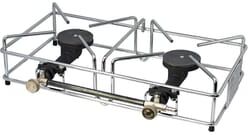
Foker Two Burner Wire Frame Gas Catering StovePerfect for Professional Outdoor Catering The Foker Two Burner Wire Framed Gas Catering Stove is designed specifically for professional outdoor caterers. This stove combines power, durability, and safety, making it an essential tool for any catering setup. Key Features: Powerful Burner: Each burner delivers an impressive 2.5kW of power, ensuring quick and efficient cooking. Durable Construction: The cast-iron burner and wire chrome-plated frame are built to withstand rigorous use and are easy to clean. Optional Flame Guard: Stainless steel flame guard available for added protection and efficiency. Versatile Gas Compatibility:112,80 £*Shipping: 0,00 £Secure redirect to the provider
-
Combo Retail Shop Solar Garden Lights, Solar Flowers Lights With Glowing Flowers & Stems, Upgraded Solar Panel Yard Decor, Gift For Mother Solar Garden Lights, Solar Flowers Lights With Glowing Flowers & Stems, Upgraded Solar Panel Yard Decor, Gift For MoTransform your garden into a magical oasis with Solar Garden Lights that add a touch of elegance and charm to any outdoor space. Featuring Solar Flowers Lights with Glowing Flowers & Stems, these lights are designed to bring vibrant color and warmth...49,97 $*Shipping: 0,00 $Secure redirect to the provider
-
What is a cofactor allosteric activator?
A cofactor allosteric activator is a molecule that binds to an enzyme at a site other than the active site, causing a conformational change in the enzyme that increases its activity. This type of activator works by promoting the enzyme's ability to bind to its substrate and carry out its catalytic function. Cofactor allosteric activators are important for regulating enzyme activity in response to changes in the cell's environment, allowing for fine-tuning of metabolic pathways and other cellular processes. **
-
Is end product repression automatically an allosteric inhibition?
End product repression is not automatically an allosteric inhibition. While end product repression often involves the inhibition of an enzyme by the end product of a metabolic pathway, this inhibition can occur through various mechanisms. Allosteric inhibition is one possible mechanism, where the end product binds to a site on the enzyme other than the active site, leading to a conformational change that inhibits the enzyme's activity. However, end product repression can also occur through competitive inhibition, non-competitive inhibition, or other regulatory mechanisms that do not involve allosteric binding. **
-
Is an end-product repression automatically an allosteric inhibition?
No, an end-product repression is not automatically an allosteric inhibition. End-product repression refers to the regulation of enzyme activity by the final product of a metabolic pathway, typically through feedback inhibition. This can occur through various mechanisms, including competitive inhibition or non-competitive inhibition, in addition to allosteric inhibition. Allosteric inhibition specifically involves the binding of a molecule at a site other than the active site, leading to a conformational change that affects enzyme activity. **
-
What is the difference between competitive and allosteric inhibition?
Competitive inhibition occurs when a molecule competes with the substrate for the active site of an enzyme, blocking the substrate from binding and inhibiting the enzyme's activity. In contrast, allosteric inhibition involves a molecule binding to a site on the enzyme that is not the active site, causing a conformational change in the enzyme that reduces its activity. Allosteric inhibitors can either enhance or reduce the enzyme's activity, depending on the specific molecule and its binding site on the enzyme. **
* All prices are inclusive of VAT and, if applicable, plus shipping costs. The offer information is based on the details provided by the respective shop and is updated through automated processes. Real-time updates do not occur, so deviations can occur in individual cases. ** Note: Parts of this content were created by AI.